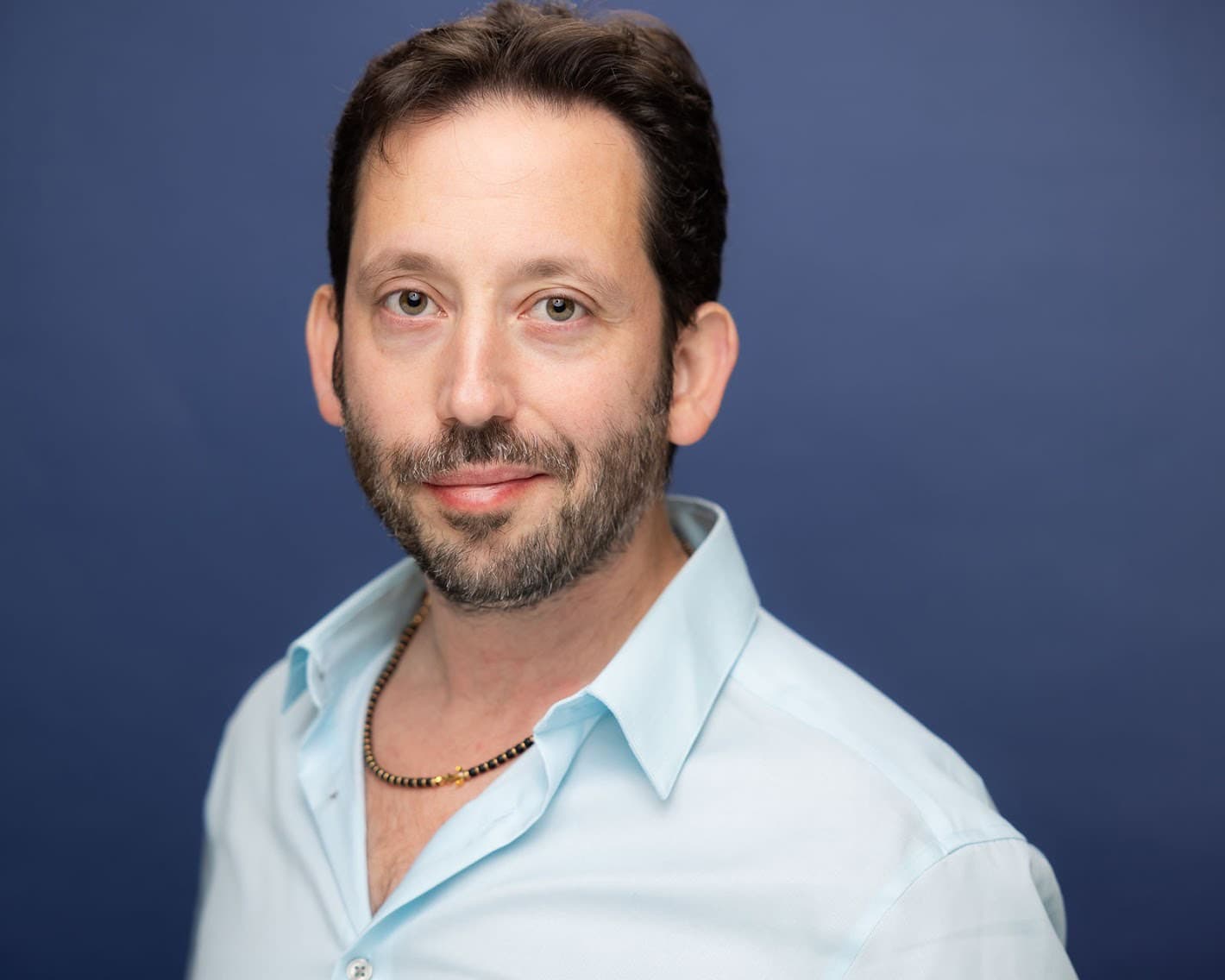
Elementor acquisition lead during $200K → $20M ARR growth
I turn your traffic into revenue you can track to the dollar, and I report that number to your CEO, not a slide deck. I agree the scope, time commitment and availability for each client or project before work starts.
Yaniv is one of the most knowledgeable people in marketing and growth. His direct, no-bullshit approach helps you see things from angles you had not considered. His passion is contagious, and it has been a pleasure working with him.
Your ad spend, qualified pipeline, and collected revenue should reconcile. I connect the tracking, automation, analysis, and spend decisions under one owner.
01 / Truth
Attribution first. Server-side tracking, GA4 clean, CAPI wired. Paid spend reconciles to tracked revenue before the budget scales. Strategy built on broken tracking is broken strategy.
02 / Automation
n8n workflows handle the repetitive layer: pacing alerts, creative rotation signals, lifecycle triggers, reporting. Runs between calls. No one has to babysit it.
03 / Agents
Automated checks track where AI recommends your company, flag unusual performance, and prepare briefs for human approval. You see the decision that needs attention, not another dashboard.
04 / Human decisions
Kill or scale stays human. The machine surfaces the signal; the capital allocation decision gets a human sign-off. No autopilot on spend.
Transparent pricing
Priced to the growth problem and scope, not a feature list. Choose a scoped audit or embedded ownership of the growth function. Audit scope and delivery timing are agreed before work starts.
Good
AI Marketing Audit
Scoped to your engagement
Scoped audit: ranked opportunities, implementation budget, and a 90-day plan. Delivery timing is agreed before work starts.
Senior growth leadership, with scope, pricing and contract terms agreed before work starts. The same senior operator, at exactly the bandwidth the problem needs.
Pre-revenue companies looking for equity-only guidance. There is no pro-bono advisory path here.
Cheaper media buying.
If the brief is running Meta for less than the current agency charges, this is the wrong product. This engagement owns tracking, automation, reporting, and spend decisions.
Full-time UA Lead seat.
A salaried UA Lead at about USD 16K (converted at the Bank of Israel representative rate of 21 Oct 2026, USD 1 = ILS 3.091) running campaigns is a different job description in a different market.
I don’t rent you ChatGPT. I install a growth machine.
Most marketing breaks because three jobs (getting the traffic, converting it, and proving what worked) sit with three different people who never agree on the numbers. I run all three myself, so they finally line up.
01 / Acquisition
Paid, organic, and product-led demand that traces to revenue, not vanity traffic, including AI search (GEO).
02 / Conversion
CRO, email, and signup flows that get more revenue out of the traffic you already have.
03 / Measurement
Attribution, tracking, and dashboards so every dollar has a source. The layer nobody else owns.
One operator. One number. One source of truth. It’s how I run fractional CMO services for SaaS, B2C, and ecommerce teams.
Operator, not advisor
Consultants advise. I operate.
You give me a revenue target. I build and run the acquisition, conversion and tracking work around it, report progress against the agreed metric, and use the evidence to decide what to change. We agree the reporting cadence before work starts.
We agree the scope, review points and contract terms before work starts. Deliverables are defined before work starts, around the agreed growth problem.
Capabilities
What I Do as Your Fractional CMO
These are the systems I implemented at Elementor, cnvrg.io, and Riverside. They work.
Fractional CMO/CGO
Full-stack growth leadership. I own revenue targets, build the growth engine, implement channels, hire the team, and install tracking, automation, and systems that scale revenue sustainably. Everything is metrics-driven.
Proof: Elementor (100x ARR), cnvrg.io (acquired), Riverside (+337% Net MRR).
Performance Marketing
I have managed $100M+ in total ad spend across my career. I build and review paid campaigns, conversion delivery and attribution records, connecting eligible campaign outcomes with CRM or billing evidence and documenting gaps.
Proof: Elementor paid became the top revenue driver, contributing to $20M ARR.
SEO & Organic Growth
No link-building. I build organic demand through content engines, community loops, and product-led distribution. Systems that compound over time.
Proof: Elementor grew to 5M+ users from organic-first growth.
Conversion Rate Optimization
I turn existing traffic into revenue. Landing pages, emails, pricing, onboarding, and trial flows. A/B tests that turn more of your visitors into paying customers.
Proof: Channel measurement and review
Product-Led Growth (PLG)
I design and implement freemium models, viral loops, referral systems, integrations, and embedded distribution channels. I grow products by designing for growth, not just marketing them.
Proof: Elementor hit 5M+ users with a built-in viral system.
Demand Gen & ABM
I build pipelines that close, not just create leads. Personalized sequences, multi-channel programs, SDR team design, and enterprise motion.
Proof: I was Head of Growth at cnvrg.io and led demand generation for technical buyers through lead qualification, content, SEO, paid acquisition and the sales handoff, so sales had what it needed to act on each opportunity. Intel acquired cnvrg.io.
Marketing Ops & Automation
Attribution systems, tracking, lifecycle flows, HubSpot mastery, operational automation, and real-time dashboards that increase ROI.
Proof: Review the acquisition, lifecycle and lead-qualification work in the linked historical cases.
Growth Team Building
I’ve built and led marketing teams at four companies from zero. I install the tools, clarity, and accountability that let a team run and deliver repeatable growth without daily oversight.
Proof: Every team I set up ran independently and delivered repeatable growth without day-to-day oversight.
Ecommerce Scaling
I scale DTC brands on paid acquisition (Meta, Google, TikTok), then squeeze more out of every order with CRO and pricing.
Proof: Profitable scaling across multiple DTC brands, every account held above breakeven ROAS.
Track record
The Proof: 3 Wins, 3 Market Leaders
Numbers do not lie. This is the playbook in action.
Riverside.fm
Head of Paid Acquisition
337% Net MRR Growth
Mission: Make paid channels profitable at scale and build the B2B pipeline.
$450K monthly budget managed ($5.4M annually)
Made paid the number 2 revenue source
337% Net MRR growth
15% CAC reduction
Channel measurement tied to revenue and CAC
Lead qualification and sales handoff
cnvrg.io
Head of Growth
Technical-buyer demand gen
Mission: Build an enterprise pipeline for technical B2B buyers.
Built growth and lead generation from scratch
Connected SEO, paid acquisition and email marketing
Implemented lead scoring and lead tracking
Built the SDR motion and sales handoff
Created events reaching 15K+ data scientists
Built the growth engine that took cnvrg.io to its acquisition by Intel.
Elementor
Head of Acquisition & Growth
100x ARR Growth
Mission: Acquisition work at Elementor during growth from $200K to $20M ARR.
$200K → $20M ARR in 3 years
5M+ active users
Paid was the #1 revenue driver
10M+ total downloads
Built growth team from zero to 8
Elementor became WordPress market leader
Created self-serve SaaS model → 100x revenue
How We Work Together
Simple. Transparent. Results-focused.
1
Discovery
We hop on a 15-minute call. You share your challenge. I tell you if I can help.
2
Audit
I audit your growth systems, channels, data, and team. You get a blueprint.
3
Implement
I implement the systems. I own metrics. You get measurable results.
4
Scale
I optimize, automate, and scale. Revenue compounds. You win the market.
The comparison
Fractional vs the alternatives
Compare the actual full-time hiring proposal with the scoped fractional engagement: responsibilities, coverage, compensation, recruitment, ramp time and handover.
Marketing agency
Single channel, junior team, bills against deliverables.
CostPricing and terms agreed for the engagement
Time to valueWeeks
Growth advisor
2–4 hours a month of strategy. No execution, no accountability.
CostPricing and terms agreed for the engagement
Time to valueOne call
Recommended
Fractional CMO/CGO (me)
I work embedded at a senior level and own the whole funnel. Scope and time commitment are agreed for each client or project.
CostScoped to your engagement
Time to valueAgreed by scope
Full-time CMO
Senior, dedicated, owns the org. Recruiting, team building, equity.
CostAn illustrative assumption, not a market benchmark: $300K–$500K/yr loaded compensation
Time to value3–6 mo to hire + 6–12 mo ramp
The real comparison
Why me over another fractional CMO
Your actual choice usually isn’t agency vs full-time hire. It’s me vs another fractional. Here is the difference.
01
I write the code, not just the deck.
n8n automations, attribution pipelines, AI agents. Most fractionals can’t build the measurement layer. I ship it.
02
Scope and time commitment agreed per client or project.
Not a roster of logos juggled at a few hours a week each. Embedded, focused work with the bandwidth your number actually needs.
03
Operator pedigree, not consultant.
I led acquisition work during Elementor’s growth to $20M ARR and growth work at cnvrg.io before its acquisition by Intel. Curious what it runs? See fractional CMO cost.
The pain
Sound familiar?
The seven sentences I hear on almost every first call.
“
Meta says 9x ROAS. GA4 shows almost no purchases. Shopify says something else entirely. What’s my source of truth?
Ecom founder“
We doubled the budget. The platform numbers doubled too. Revenue didn’t.
SaaS CEO“
LinkedIn CPCs hit $30. Nobody could tell me if a single closed deal ever touched those clicks.
Cyber SaaS CMO“
We celebrate MQLs on Monday and miss revenue on Friday.
B2B CMO“
We hired an agency, a freelancer, and a consultant. Still no pipeline.
B2B founder“
Signups grow. Revenue doesn’t. Nobody can explain why.
SaaS CEO“
The agency’s report says great month. Our bank account disagrees.
SaaS founder
Testimonials
What Companies Say
The people who trusted me with their growth.
“
I was lucky enough to hire Yaniv as cnvrg.io Head of Growth. Yaniv joined the company and basically built from scratch our leads generation system, including SEO, PPC, Email marketing, and leads scoring & leads tracking practices. Yaniv is one of those people who knows to do everything (and in case he doesn’t know something, he would in a day) and to manage any process / project. Yaniv is smart, sharp, devoted and hands on like no one I ever met before. He is the person you would like to go into a battle with.
Yaniv was a key driver of growth during a period of explosive scale. He builds AI-native, data-driven systems that work at speed and do not break as you grow. One of the sharpest growth people I have worked with - if you are scaling a technical or AI product, he is the person to bring in.
Gil WeitzmanHead of AI Marketing, Intel“
As co-founder and CEO of cnvrg.io, I hired Yaniv to build our growth function. He built our entire B2B growth engine from scratch - pipeline, SDR motion, content, SEO, and webinars - and was a key part of the momentum that led to our acquisition by Intel. Yaniv is sharp, relentless, and one of the best growth hires I made.
Yochay EttunCo-founder & CEO, cnvrg.io (acquired by Intel)“
Yaniv is one of the most knowledgeable people in marketing and growth. His direct, no-bullshit approach helps you see things from angles you had not considered. His passion is contagious, and it has been a pleasure working with him.
I start by mapping the funnel, checking the tracking and identifying the main growth constraint. We agree the diagnostic scope, deliverables, timing and any follow-on engagement before work starts.
Work with me
Three ways to start
Tell me about your growth challenge. I’ll tell you if I can help.
Diagnostic
Scoped to your engagement
A diagnostic engagement maps the funnel, audits tracking and identifies the main growth constraint. We agree its deliverables, timing and any follow-on work before starting.
Most chosen
Operator
Scoped to your engagement
Embedded Fractional CMO & Head of Growth. I own the funnel and the revenue target, run the channels, and ship every week. I agree the scope, time commitment and availability for each client or project before work starts.
AI infrastructure
Scoped to your engagement
Custom n8n workflows, Claude Code pipelines, AI agents, and attribution systems. Built and run so marketing moves at machine speed.
I agree the scope, time commitment and availability for each client or project before work starts. You get senior growth strategy and hands-on execution.
What is the investment?
Pricing is agreed per client or project. A focused diagnostic, ongoing growth leadership and hands-on implementation have different deliverables and capacity requirements. We define the problem, work I personally own, team dependencies, time commitment and fees before starting. Media spend and other third-party costs are identified separately when relevant.
Do you work with startups or enterprises?
Both. I have worked with early-stage startups ($200K ARR) and scaled enterprises ($20M ARR). If you are serious about growth, we should talk.
What channels do you focus on?
Google, Meta, LinkedIn, TikTok, Snapchat, X, Reddit, YouTube, Telegram, SEO, email, affiliate, ABM, product-led growth. Whatever drives the best ROI for your business. I do not default to one strategy.
Do you only do marketing?
No. I build the entire growth system: strategy, channels, attribution, automation, team, product-led loops. Full-stack growth.
How do I know if we are a fit?
Book a 15-minute call. I will give you honest feedback. If I can help, we will talk next steps. If I can not, I will tell you immediately.
Do you offer hourly consulting?
Yes. Pricing for consulting, audits, or advisory sessions depends on the scope of the engagement.
What are the steps of working together?
It runs in four stages: discovery, audit, implement, and scale. Discovery is a 15-minute call where you share your challenge and I tell you if I can help. In the audit I look at your growth systems, channels, data, and team, and you get a blueprint. Then I implement the systems and own the metrics, and finally I optimize, automate, and scale. Scope, review points, and contract terms are agreed before work starts.
How is a fractional CMO different from an agency, an advisor, or a full-time CMO?
The difference is scope and ownership. An agency is single channel with a junior team that bills against deliverables. A growth advisor gives 2–4 hours a month of strategy, with no execution and no accountability. A full-time CMO is senior, dedicated, and owns the org, including recruiting, team building, and equity. As a Fractional CMO & Head of Growth I am senior, embedded, and own the whole funnel, with scope and time commitment agreed per client or project.
How do you agree scope and time commitment for a client or project?
I agree the scope, time commitment and availability for each client or project before work starts. Availability changes over time, so please ask me directly about the current situation.
Who is this not for?
This is not for pre-revenue companies looking for equity-only guidance, and there is no pro-bono advisory path here. It is also the wrong product if the brief is running Meta for less than the current agency charges, because this engagement owns tracking, automation, reporting, and spend decisions. A salaried full-time UA Lead seat is a different job description in a different market.
How do you measure and report results?
I report revenue you can track to the dollar, to your CEO and not in a slide deck. Attribution comes first, so paid spend reconciles to tracked revenue before the budget scales. You give me a revenue target, I report progress against the agreed metric, and we agree the reporting cadence before work starts.
Is there a minimum term for a fractional engagement, and how do I end it?
Contract terms, including duration and notice period, are agreed per engagement. Ending a fractional engagement involves no severance. Before work starts, we agree the scope, review points and contract terms, and deliverables are defined around the agreed growth problem.
The hub
Explore Every Service
From fractional leadership to AI marketing systems. Three case studies. Eight Hebrew pages. One operator. Two paths most teams start with: a full-stack Fractional CMO & Head of Growth engagement and revenue-tied paid media. To compare the Diagnostic, Operator and Advisory engagements, see fractional CMO pricing.
Fractional marketing leadership and the channels that compound: GEO, SEO, paid media, attribution, and lifecycle. A 100x increase in Elementor ARR and $100M+ in total ad spend managed across roles sit behind every play below.